Home About Why Us Design Services Residential Projects Clients Maintenance Team Guides Contact
Home About Why Davies Group Design Services Residential Projects Clients Maintenance Team Guides Contact
Guides · Decision-Making

How to Choose a
Fit-Out Contractor in Dubai.

Almost every fit-out contractor's website says the same thing: experienced, reliable, on time. Here is what actually separates them in practice, and the specific questions worth asking before you sign anything.

← All Guides

Check approval
status first.

Before anything else, ask which specific malls a contractor holds approved-installer status with, and whether that approval covers architectural (ARCH) works, MEP works, or both. Many contractors hold only one category, which means a second company often has to be brought in to cover the other — adding coordination risk and cost that rarely shows up in the initial quote.

A contractor with dual MEP and ARCH approval across major malls like MAF, Nakheel, Emaar and Aldar can typically move faster through submissions simply because they are not waiting on a second company's paperwork.

What To Actually Ask

Questions worth asking upfront.

Is design done in-house or outsourced?
Outsourced design adds a handoff between the people who drew it and the people who build it — a common source of on-site surprises.
Do you manufacture joinery yourselves?
A contractor with their own workshop controls quality and lead times directly, rather than relying on a third-party joinery subcontractor.
Which specific malls are you approved at?
Approval is granted mall by mall, not company-wide — a contractor approved at one mall is not automatically approved at another.
Who manages authority submissions?
Ask if this is handled by an in-house team or an external consultant, since this is one of the most common causes of delay.
What happens after handover?
Ask specifically about defect liability period length and how maintenance requests are handled once the project is complete.
Can I see similar projects, not just any projects?
A portfolio full of retail work says little about F&B capability, and vice versa — ask for examples in your specific category.

Red flags worth
taking seriously.

A few warning signs are worth taking seriously regardless of how competitive the quote looks. A contractor who cannot name the specific malls they hold approval with, who is vague about whether design work happens in-house, or who cannot explain how authority submissions are managed, is more likely to hand off critical parts of your project to subcontractors you never meet and cannot vet.

Price alone is a poor filter — the cheapest quote often excludes authority submission management, defect liability coverage, or in-house design, all of which get billed separately later or become your problem to coordinate.

Why one contract,
one team, matters.

The single biggest practical advantage of a fully in-house contractor — design, technical drawings, authority submission, manufacturing and construction all under one roof — is accountability. When something does not go to plan, there is one team responsible for the whole outcome, not three separate companies each pointing at the others. This is the same reason we built Davies Group UAE this way from the start: our own design team, our own fabrication workshop, and our own authority submission team, rather than outsourcing any of it.

Frequently Asked

Common questions.

Does a lower quote usually mean lower quality?
Not always, but it is worth checking exactly what is included. A lower quote that excludes authority submission management, in-house design, or defect liability cover often ends up costing more once those gaps surface.
How important is mall-specific approval versus general experience?
Very important. Approval is granted per mall, so a contractor's general experience does not guarantee they are approved at the specific mall your unit is in — always confirm this directly rather than assuming.
Should I use one contractor for design and a different one for build?
It is possible, but it removes the single point of accountability that comes with one team owning both. If the build reveals an issue with the design, a split arrangement makes it harder to resolve quickly.
What should I ask about after the project is finished?
Ask specifically about the defect liability period (12 months is standard for a well-run contractor) and how maintenance requests are handled — a good contractor treats aftercare as part of the relationship, not an afterthought.
Related Reading

Explore further.

Why Davies Group UAE → About Davies Group UAE → Maintenance & Aftercare → Mall Authority Approval Explained → Our Projects →
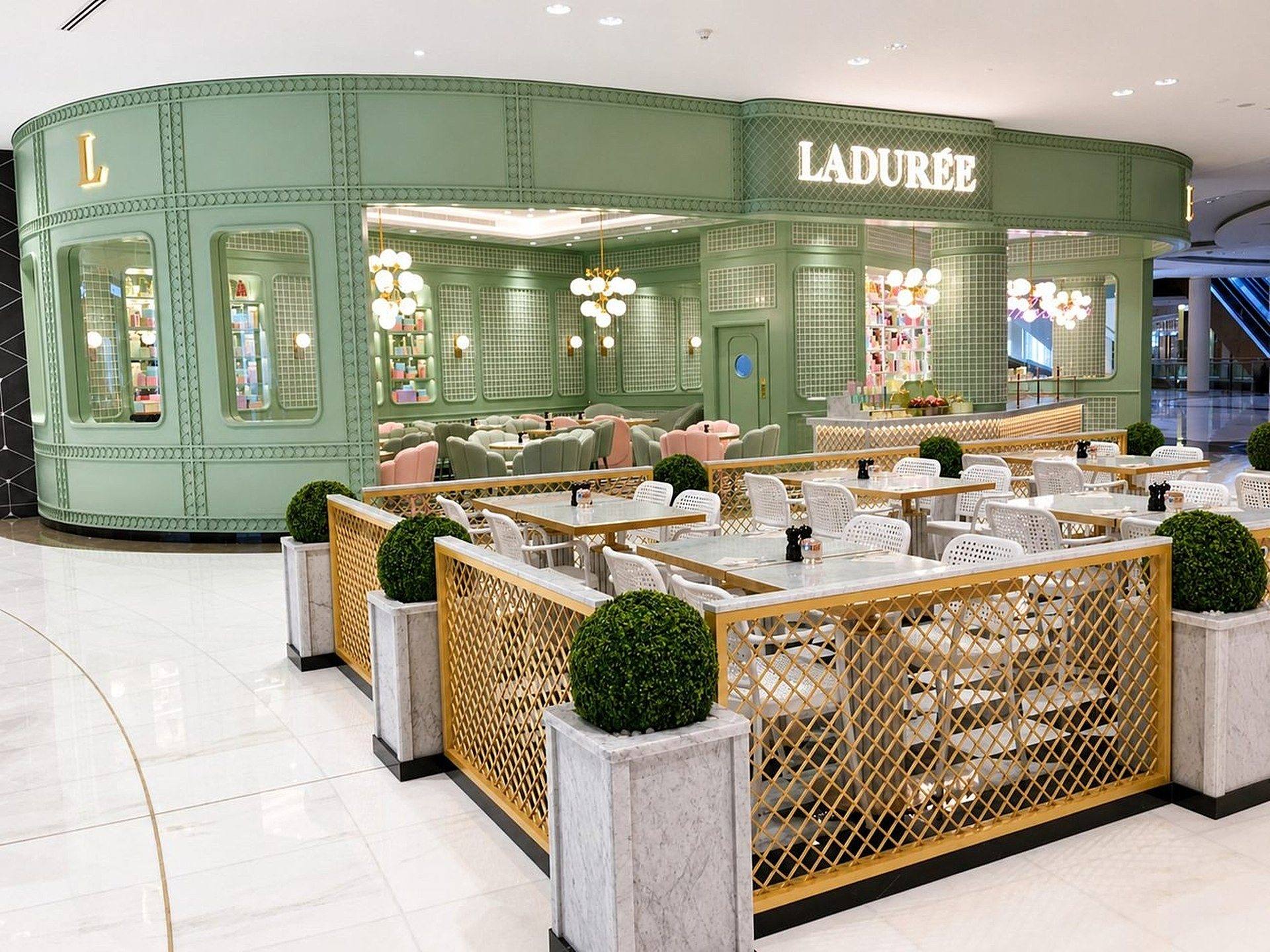
Laduree storefront, The Dubai Mall, by Davies Group UAE
Start Your Project

Ready to talk about
your fit-out?

Tell our team about your project and we will come back to you within 24 hours.